


Dog Breeding
Best Age To Breed A Dog (Male & Female)
5 min read
Find out the best age to breed dogs and the key factors involved. Ensure your dog’s health and safety with our expert breeding insights.
Updated
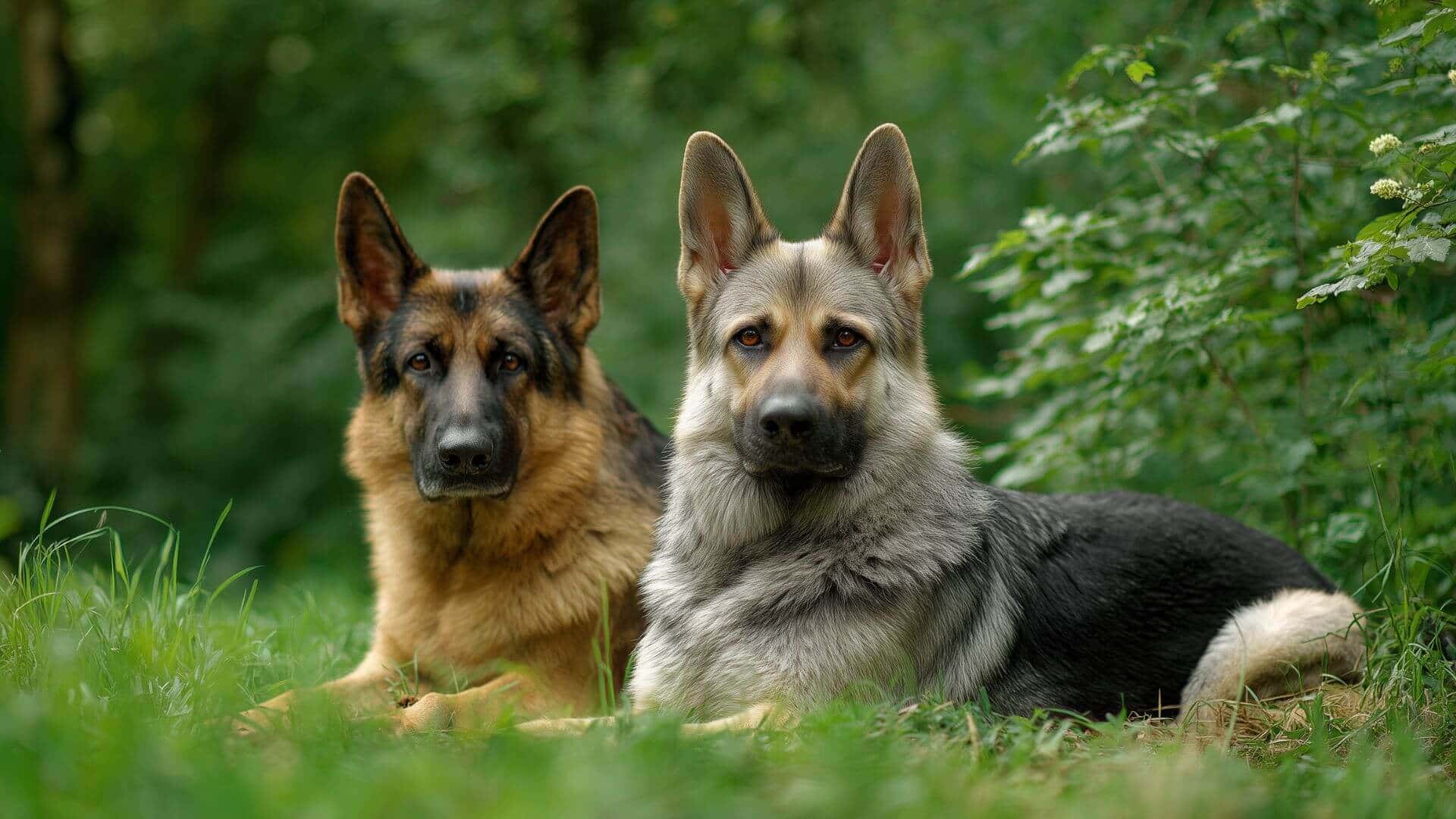
Breeding a German Shepherd well is mostly a discipline problem, not a guesswork problem. Test the hips and elbows. Test the SOD1 gene. Match working drive to working drive, show conformation to show conformation.

German Shepherd

German Shepherd

German Shepherd

German Shepherd
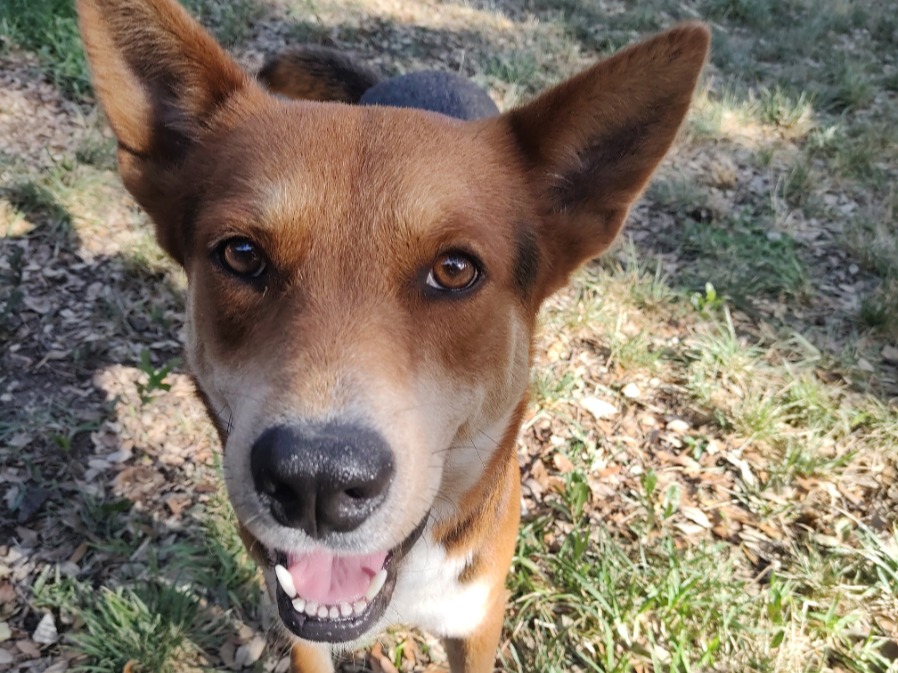
German Shepherd mix

German Shepherd mix

German Shepherd

German Shepherd
OFA or PennHIP hips, OFA elbows, DM (SOD1) DNA, a cardiac exam, and a current eye CERF on both dogs. Without those, you are guessing.
Coefficient of inbreeding under 6.25 percent, complementary OFA scores, and DM status. Working line to working line, show line to show line.
Progesterone draws from day 6 of estrus catch the LH surge. Calendar timing alone misses the fertile window in quiet GSD heats.
Day-28 ultrasound confirms pregnancy. Day-55 X-ray counts puppies. GSDs are deep-chested, so have a vet on standby for the first whelping.
Short answer
Before breeding, both parents need an OFA or PennHIP hip evaluation, OFA elbow grading, DNA testing for degenerative myelopathy (SOD1), a cardiac exam, and an annual eye CERF. The German Shepherd Dog Club of America also strongly recommends a broad DNA panel before any pairing.
About 1 in 5 German Shepherds shows some degree of hip dysplasia on X-ray. OFA reports 20.6 percent dysplasia across roughly 138,000 evaluated German Shepherds[5]. That single number drives most of what serious GSD breeders test for. The AKC's Herding Group health-testing requirements list hips, elbows, and DM as the breed-club essentials for the German Shepherd[2].
The standard pre-breeding checklist is OFA or PennHIP hips, OFA elbows, DM/SOD1 PCR, OFA cardiac (auscultation by a board-certified cardiologist is preferred), and an annual eye exam by an ACVO ophthalmologist[4]. A broad DNA panel from Embark adds coverage of MDR1, hyperuricosuria, and 200+ other markers in one $159 swab[17].
How to read an OFA hip score
OFA only scores at 24 months or older. Preliminary scores before 24 months can change[4].
How to read an SV a-Stamp
The SV will certify radiographs at 12 months; OFA does not finalize until 24 months[6].
DM (degenerative myelopathy) is the breed’s most-cited genetic disease. It is a fatal, progressive disease of the spinal cord and resembles ALS in humans. UC Davis VGL sells the SOD1 PCR test for $50, and the test is autosomal recessive: a dog needs two copies of the mutated allele to be at-risk[7]. The test is the best available but not perfect; some clear dogs still develop DM and some at-risk dogs never do.
Beyond DM, the breed-defining inherited disease is exocrine pancreatic insufficiency (EPI). A 2010 study in the Journal of Veterinary Internal Medicine found EPI heritable in German Shepherds with an autosomal recessive model, although recent genome-wide studies suggest a complex polygenic inheritance[9]. There is no single PCR test for EPI yet, so family-history disclosure is the working tool.
Short answer
Female German Shepherds should wait until their third heat cycle, typically 18 to 24 months. Males are sexually mature at 12 to 15 months but should not be used for planned breeding until OFA hip and elbow clearances are valid at 24 months. Breeding earlier raises dystocia risk and skips the OFA clearance window entirely.
Wait for the third heat cycle. Earlier breeding raises the risk of dystocia, poor maternal care, and permanent hip injury under late-term weight.
Sexually mature at 12 to 15 months, but OFA hip and elbow clearances and a Champion or working title come first.
A female German Shepherd’s first heat usually arrives between 6 and 12 months, but in large-breed lines it skews later, often 12 to 16 months. Cornell’s Riney Canine Health Center describes a complete cycle as roughly 6 months long, which gives most GSDs two heats per year[14].
Why wait until the third cycle? Two reasons. First, the female’s skeleton, especially the hips, is still maturing through 18 to 24 months. Breeding before then exposes the dog to dystocia risk and to permanent hip injury under the weight of late-term pregnancy. Second, OFA does not issue final hip or elbow numbers under 24 months. Anything earlier is a preliminary score, and a preliminary score is not what serious breeders work from.
What if my GSD's heat is quiet?
Some German Shepherd heats are quiet: light bleeding, little vulvar swelling, or only subtle behavior cues. Calendar timing (day 10 to 14 of estrus) misses the fertile window in those cycles. Progesterone testing is the universal fix.
Your vet draws blood starting around day 6 and every 2 to 3 days. Cost runs $50 to $150 per draw, with 2 or 3 draws per cycle being typical.
Males are useful as proven studs once they have completed their OFA hips, OFA elbows, DM clearance, and at least one Champion or working title to demonstrate phenotype. A 12-month-old male is biologically capable, but a 12-month-old male has no OFA paperwork and no track record.
Retirement. Most parent-club guidance for working and herding breeds is to retire females after 4 to 5 litters, or after age 7, or after one difficult whelping, whichever happens first. German Shepherds are deep-chested, and pregnancy strain compounds across litters. The same timing logic applies to every breed; for a cross-breed reference, see our dog breeding hub.
Short answer
Choose a partner whose OFA hips and elbows are equal or better than your dog’s, whose 5-generation coefficient of inbreeding (COI) stays under 6.25 percent, and whose DM (SOD1) status is complementary. Never breed two DM carriers together. The GSDCA recommends pairing a carrier only with a DM-clear mate to lower the at-risk allele frequency without collapsing genetic diversity[3].
Coefficient of inbreeding thresholds
Target zone. Common great-grandparent ceiling for working breeds.
Caution. Recessive disease risk climbs sharply. Common in show lines.
Disqualifier in most parent-club guidance.
Three numbers do most of the work in GSD mate selection: hip score, elbow score, and SOD1 status. Match a Fair-hipped female with a Good or Excellent male, not the other way around. Track elbow grades the same way, since elbow dysplasia is independent from hip dysplasia and the inheritance pattern is polygenic.
DM (SOD1) pairing math
The DM math deserves attention. A UK retrospective study of GSDs flagged caution: the SOD1 allele frequency in the GSD population is high enough that aggressive elimination would reduce genetic diversity[8]. The breed-club position is gradual reduction, not panic culling.
Coefficient of inbreeding is the next number to track. The Institute of Canine Biology and most population geneticists use 6.25 percent (one common great-grandparent) as the practical ceiling for working breeds[19]. Many GSD show lines run higher than this because of popular-sire effects. An Embark panel reports both COI and a relatedness score against your candidate mate, which is the fastest way to verify[17].
Temperament evaluation matters more in GSDs than in many breeds, because the line difference is real (see the next section). A nervy, reactive GSD bred to a stable, confident GSD does not average out; it more often produces a litter of nervy puppies plus a few stable ones. Cull early, breed only the stable temperaments forward.
Finally, EPI family history. There is no SOD1-style PCR test for EPI yet[9]. Ask the stud or dam owner whether any first-degree relatives have been diagnosed and whether the line has produced any EPI puppies. If the answer is yes, the dog should not breed.
5 questions to ask the other owner
Short answer
Five recognized German Shepherd lines exist: West German show (the red-and-black saddle conformation type), West German working (balanced drives, SV-titled), Czech (high prey drive, military origin), DDR or East German (bulky, weather-tough, endurance), and American show (taller, more angulated rear). Breeders choose lines based on the puppy’s intended job, not just looks.
The German Shepherd is one breed on paper and five breeds in practice. The split is real and dates back roughly 70 years. The SV (Verein für Deutsche Schäferhunde) splits the breed into Showline (Hochzucht) and Working line (Leistungszucht). Inside those, breeders further divide by geography and historic kennel: West German, East German (DDR), Czech, and American show[1].
West German show lines are the most common in Germany. They are bred to the SV conformation standard, typically present as black and red saddleback dogs, and prioritize a balanced, calmer temperament. They are popular as family dogs and protection sports dogs with handlers who want a steadier partner. The downside is a softer drive; not every West German show dog will hold up to IGP-level bite work.
West German working lines focus on stable nerves, high drive, and working titles. The color range is broader (sable is common), the structure is more variable, and the dogs typically come from kennels that title in IGP, herding, or police work before breeding. Drive is high but recoverable.
Czech working lines came out of the Pohranicni Straze kennel of the Czechoslovakian army during the Cold War, where dogs were used for border patrol and military work. They are agile, intense, and often the highest-drive option. Czech lines are common in modern police and military programs and demand experienced handlers. Closely related are DDR (East German) lines, bred to patrol the Iron Curtain border under harsh weather. DDR dogs are heavier-boned, more weather-tough, often dark sable or sable-black, and known for endurance over flash.
American show lines diverged from West German show lines in the 1970s and prioritize a longer rear stride and more angulated croup. They show well in the AKC ring but are increasingly debated for soundness. For a faster, more drive-saturated working alternative, see our Belgian Malinois breeding guide. For a sporting-breed contrast, see our Labrador breeding guide.
Which line fits which home
Short answer
German Shepherd coat color is mostly governed by the Agouti locus. Sable (aw) is dominant, then black-and-tan (as), then bi-color (at), then solid black (a) at the bottom. A solid-black puppy needs two copies of (a). White coat comes from a separate recessive at the MITF locus and is independent of agouti.
Agouti dominance hierarchy in German Shepherds
Banded hair. Most dominant. Single copy is enough to express. Most common in working lines.
Classic saddleback pattern. The West German show-line look. Dominant over bi-color and solid black.
Mostly black with tan only on legs and small face points. Dominant over solid black, recessive to as and aw.
Most recessive. Needs two copies. Two solid-black GSDs can only produce solid-black puppies.
The classic paper on GSD color is Schmutz, Berryere & Goldfinch (1984) in the Journal of Heredity. They established the dominance hierarchy at the Agouti locus: sable over black-and-tan over bi-color over solid black[18]. Sable hair is banded with multiple colors along its length, which is why sable puppies often shift in tone through their first year.
A solid-black German Shepherd needs two copies of the recessive (a) allele. Two black GSDs bred together can only produce more black, since neither parent can pass a non-(a) allele. A sable dog, by contrast, can carry any of the four agouti alleles in its second copy, so a sable-to-sable mating can produce sable, black-and-tan, bi-color, or solid black puppies depending on what each parent carries.
White and panda: separate loci
Recessive at the MITF locus, independent of agouti. AKC-registrable but disqualified from conformation. UKC and the White Shepherd Genetic Project register it as a separate variety.
Single founder mutation in the KIT gene from one female in 2000. Dominant but rare. Two pandas should not be bred together; the homozygous form is linked to health problems.
Color is what most owners look at first. It actually matters the least. Pick a healthy, well-tempered, line-typed pair first. Then think about color.
Short answer
A typical German Shepherd litter is 6 to 10 puppies, with 8 as the breed average[16]. First litters are usually smaller, often 4 to 6. Pregnancy lasts about 63 days from ovulation. Call the vet if she strains hard for 20 to 30 minutes without producing a puppy, more than 2 hours pass between puppies, or you see green discharge with no puppy following.
The three stages of a German Shepherd whelping
Restless, panting, nesting, refusing food. Temperature drops below 100°F (37.8°C) 12 to 24 hours before puppies arrive.
Visible straining and contractions. First puppy within 4 hours of stage 2, then 30 to 60 minutes between each[15].
One placenta delivers after each puppy. Count them. A retained placenta is a vet emergency.
GSD pregnancy is 63 days from ovulation, with a normal range of 58 to 68 days from the LH surge. Day 28 is ultrasound day, when a reproductive vet can confirm pregnancy and rule out resorption. Day 55 is X-ray day, when the puppy skeletons calcify enough to count. Both numbers matter because a deep-chested, large-litter breed like the GSD needs the puppy count for whelping logistics.
A normal GSD whelping runs 6 to 12 hours of active labor with 30 to 60 minutes between puppies. The breed sits in a tricky zone for dystocia: not as deep-chested as a Great Dane or Mastiff, but deeper than a Lab. Cornell’s dystocia guidance sets the bright-line rules[15].
Call the vet immediately if any of these happen
A puppy may be stuck in the birth canal. Common in large GSD puppies.
In a large litter, this gap means stalled labor or uterine inertia.
Green (uteroverdin) signals placental separation. A puppy is in distress.
She may be in shock or have low blood calcium (eclampsia).
Litter size variability matters. The breed average is 8 puppies, but a healthy GSD can produce anywhere from 1 to 15. A first litter from a 2-year-old dam is more often 4 to 6 puppies, and that is normal. Larger litters (10+) drain the dam fast, so the last 3 or 4 puppies often need the most help latching and may need supplemental bottle feeding.
C-sections are common enough in GSDs that the vet should be on call for any whelping over 8 puppies, any first litter, or any litter following a previous dystocia. C-section cost runs $1,500 to $4,000 depending on time of day and emergency status.
Short answer
German Shepherds are the most over-represented breed in gastric dilatation-volvulus (GDV, or bloat) studies, making up about 25 percent of hospitalized GDV cases[11]. Lifetime risk in deep-chested breeds reaches 36.7 percent. Responsible breeders disclose family history of GDV, often recommend prophylactic gastropexy in at-risk lines, and counsel buyers on slow feeding and a first-degree relative check.
Prophylactic gastropexy reduces GDV recurrence risk from up to 80% down to under 5%. Many serious working-line breeders now recommend it at spay or neuter for placement puppies in at-risk lines.
A 2025 single-institution analysis of 130 GDV cases found German Shepherds were the most-represented purebred at 25.38 percent of cases[11]. The Purina Pro Club bloat study ran a multi-year genetics project specifically in GSDs because of the over-representation[10]. The genetic component is real but not Mendelian; the strongest predictor is a first-degree relative (parent or sibling) with a GDV history.
What does this mean for a breeder? Disclose. Ask the stud and dam owner whether any of their offspring have had a GDV episode and whether any first-degree relatives have bloated. If the answer is yes in two generations, the line should not breed. Some serious working-line breeders also recommend prophylactic gastropexy (a surgical stomach-tack) at spay or neuter for puppies they place, since gastropexy reduces recurrence risk from up to 80 percent down to under 5 percent.
Other GSD-specific cancer and disease risks to disclose
The combined picture is that a German Shepherd breeding program is also a disclosure program. Buyers paying $3,000 to $5,000 for a working-line or imported puppy expect to see OFA numbers, DM status, AND a family-history disclosure of GDV, HSA, and EPI in the line. Withholding any of those ends the breeder’s reputation faster than a single bad litter.
Short answer
Expect $1,500 to $3,500 in pre-breeding health testing for one female German Shepherd (OFA hips, OFA elbows, DM panel, cardiac, eyes, Embark). Stud fees in the US range from $500 to $2,500 depending on titles and line, with imported European studs running higher. Progesterone draws add $50 to $150 each. Emergency C-sections run $1,500 to $4,000.
Estimated cost of a first German Shepherd litter
Ranges are typical US pricing. Budget against the litter, not the individual puppy. Average GSD litter is 6 to 10.
What can the puppies sell for?
Market range only, not a Petmeetly endorsement. Puppies from parents without OFA and DM clearances sell for far less because the buyer takes on the health risk.
The first true cost is health testing on the female before any breeding decision. OFA hip and elbow X-rays under sedation run $300 to $700 combined. The DM/SOD1 test from UC Davis VGL is $50[7]. Cardiac exam by a board-certified cardiologist runs $150 to $300. Annual eye CERF runs $50 to $100. An Embark panel adds $159. Brucellosis testing before each mating runs $40 to $80[20].
Stud fees are where line type shows up. A US-titled show-line or working-line GSD stud typically charges $500 to $1,500. A European-imported, IGP-titled, hip-Normal stud routinely charges $1,500 to $2,500 plus shipping for chilled or frozen semen. Some breeders prefer “puppy back” arrangements where the stud owner gets first or second pick of the litter in lieu of a cash fee.
For revenue context: AKC-affiliated breeders in the US typically sell German Shepherd puppies for $2,000 to $4,500. Working-line and European import puppies often start at $3,500 and climb to $5,000 or more for titled-parent litters. Buyers who pay top-of-market expect full OFA and DM clearances on both parents, and a litter without those clearances should price well below market. See live US listings on our German Shepherd puppies for sale on Petmeetly page.
Short answer
A German Shepherd stud agreement should record both dogs’ OFA hip and elbow numbers, DM (SOD1) status, AKC or SV registration, the agreed stud fee or puppy choice, a repeat-breeding clause if no live litter results, ownership of any frozen semen, and the dam’s vaccination and brucellosis-test status. Both parties should sign before the first mating.
Clauses every German Shepherd stud contract should name
The boilerplate clauses are universal: parties identified, dogs identified with registration numbers, stud service dates, fee or puppy-back terms, and the repeat-breeding clause. The repeat-breeding clause matters because GSD timing on quiet heats can miss, and a 2-puppy litter is sometimes treated as “no live litter” for repeat-breeding purposes. Get the threshold in writing.
GSD-specific clauses add three things. First, current OFA hip and elbow numbers for both dogs, listed as the actual OFA database number, not just “passed”. Second, current DM/SOD1 status for both dogs, with the lab and date. Third, brucellosis test results for the dam within 30 days of mating, since brucellosis is a venereal disease and a positive test ends the mating[20].
Frozen and chilled semen agreements need extra care. Who owns the straws after the mating? Who pays storage? What happens if the original stud dog dies? Many GSD breeders now stipulate that 50 percent of remaining straws revert to the stud owner’s estate. If the male is imported, AKC/SV registration paperwork and the chilled-shipment veterinary paperwork live as appendices to the contract. For a deep-dive on the contract logic that applies across breeds, see our German Shepherd breeding deep-dive blog.
More vetted material for owners planning a German Shepherd litter
Find out the best age to breed dogs and the key factors involved. Ensure your dog’s health and safety with our expert breeding insights.

Understand the importance of socializing your pet. This guide will help you create positive experiences for your pet, ensuring they thrive in various environments.

Planning to breed your dog? Use our step-by-step dog breeding checklists to manage health tests, mating, whelping and puppy care—always with vet-backed guidance.
No. A six-month-old GSD is not physically or sexually mature. Females should wait until their third heat cycle, typically 18 to 24 months. Males are sexually mature around 12 to 15 months but should not be used for planned breeding until OFA hip and elbow clearances are valid at 24 months. Breeding earlier raises dystocia risk and produces puppies from a dog with no finalized hip score.
Most parent-club guidance recommends a maximum of 4 to 5 litters across a female German Shepherd's lifetime, with at least one full heat cycle of rest between litters. Retire females after age 7 or after any difficult whelping, whichever comes first. GSDs are deep-chested and pregnancy strain compounds.
Degenerative myelopathy (DM) is incurable and progressive. The test is autosomal recessive: a carrier has one copy of the mutated SOD1 allele and is safe to breed only when paired with a DM-clear (zero-copy) mate. Two carriers should never be bred together because, on average, one in four puppies will be at-risk.
GSD pregnancies last about 63 days from ovulation, with a typical range of 58 to 68 days. A reproductive vet can confirm pregnancy by ultrasound around day 28 and count puppies by X-ray around day 55.
No. Solid black GSDs carry two copies of the recessive (a) allele at the Agouti locus. A black-to-black pairing can only produce solid-black puppies, since neither parent carries a non-(a) allele to pass.
A German Shepherd litter is usually 6 to 10 puppies, with 8 as the breed average. First litters are smaller, often 4 to 6. Older or smaller dams also tend toward smaller litters. A vet can confirm the count by X-ray around day 55 of pregnancy.
Early signs include a calmer mood, slight nipple swelling, and a small drop in appetite around week three. The reliable confirmation is an ultrasound at 28 days from ovulation, followed by an X-ray at 55 days to count puppies. Home pregnancy tests for dogs are not reliable.
Most US states require puppies to stay with their mother and littermates until at least 8 weeks of age. Many responsible GSD breeders wait until 9 to 10 weeks because the extra time builds confidence, bite inhibition, and social skills. Never let a GSD puppy leave before 8 weeks.
White is a disqualifying color in AKC conformation but white German Shepherds are AKC-registrable and can be bred. The United Kennel Club recognizes the White Shepherd as a separate variety. Two white GSDs bred together can only produce white puppies. A white-to-non-white pairing produces colored puppies that carry one copy of the white allele.
Typical US prices run $2,000 to $4,500 per puppy. Pet-line GSDs from health-tested parents sit at the lower end. Working-line, show-line, or imported European pedigrees command the upper end and routinely list at $3,500 to $5,000. Puppies without OFA and DM clearances on both parents should sell for much less because the buyer is taking on the health risk.
A normal GSD whelping runs 6 to 12 hours of active labor with 30 to 60 minutes between puppies. Call the vet right away if she strains hard for 20 to 30 minutes with no puppy, more than 2 hours pass between puppies, you see green or dark discharge without a puppy following, or she collapses. Large GSD litters (10 or more) are physically draining, so the last few puppies often need the most help.
Some GSD heats are quiet: light bleeding, little vulvar swelling, or unusual behavior cues. Calendar timing (day 10 to 14 of estrus) misses the fertile window in these cases. Progesterone testing is the universal fix. Your vet draws blood starting around day 6 and every 2 to 3 days, watching for the LH surge at progesterone 2 to 3 ng/mL and ovulation at 5 to 8 ng/mL. Optimal breeding is when progesterone climbs to about 10 ng/mL. Cost runs $50 to $150 per draw, with 2 or 3 draws per cycle being typical.
German Shepherds are the most over-represented breed in GDV (bloat) hospitalization studies. Prophylactic gastropexy at spay or neuter reduces recurrence risk from up to 80 percent down to under 5 percent. Many serious breeders now recommend gastropexy as standard for GSDs with any family history of GDV. Discuss timing and cost ($400 to $1,200) with your vet.
Sources
Discover breeding guides for different dog breeds and find the perfect match for your breeding program
7,482+ German Shepherds listed on Petmeetly right now. Sign up to browse and message owners directly.
No card required to sign up.